

The real world is calling.
Will you answer?

This week I intended to write about roads, but the scope of the essay has expanded and frankly I’ve run out of time. So my thoughts will have to go unsaid for a while longer, and I’m sure you’ll be waiting with baited breath.
Instead, here is something that has been playing on my mind a lot recently.
Last week I went to an event for a friend’s birthday, and I found myself seated with some people who seemed far more interested in texting others than talking to me.
Perhaps it’s a reflection on how unriveting my company is. Perhaps, hopefully more likely, it’s a reflection on how powerful the pull of our magical glowing devices is.
When social media began to evolve into the shape we currently know it about 15 years ago, it ushered in a world of connectivity people had only dreamed of before.
Facebook changed the world of communication, picking up the ball from MySpace and Friends Reunited and sending it stratospheric. On paper it sounds magical: instant connection with anyone in the world, immediate access to new communities catering for any niche interest a human could possibly be interested in.
I was at university in 2010 when Facebook became suddenly popular, and it’s difficult to think of how I would have arranged my social life without it. It was an extremely convenient way of organising events and keeping track of numbers. Each club or society used its Facebook page for mass communication. Feedback was instantaneous and far more efficient than one-way mailing lists.
But I was also at university a few years before smartphones really took off. I remember us all gathering around someone’s iPod Touch, oohing and aahing at the prospect of having little games in the palm of your hand to play on the bus. But it was out of my price range. And Facebook remained firmly in the confines of our computers, not our hands. When we came together for those events organised on Facebook, we were present. Conversation and laughter flowed as freely as the drinks.
In 2014, I visited Hong Kong on my way back from Australia. There were signs all over the metro: Watch where you are walking, do not look at your phone.
Not many people were heeding those signs. Their necks were craned over their smartphones instead. My antique iPhone 3 had been stolen from my hostel about six months prior and I couldn’t afford a replacement, so I had no choice but to watch where I was walking.
I remember thinking how alien it all was, these rows of brainwashed commuters shuffling in unison, together but not aware of each other, like a scene from a dystopian science fiction film.
I had spent a year in remote parts of Australia with only periodic access to internet connection. I had read a lot of books, visited a lot of places, and hiked and surfed and swam and camped and helped on family-owned organic farms, and been able to check my emails maybe once or twice a fortnight.
Coming back home to a world that was now permanently plugged in was like coming back to an alternative dimension.

But it didn’t take long to adapt. And today, I struggle with screen time. The battle between me and my phone is long, arduous, and I fear without end.
Yes, I’ve tried everything. I’ve deleted all the apps, only to have to reinstall them again because I need them. I’ve turned it black and white, switched off notifications, kept it in another room, shut the whole device off, set it to airplane mode, added timers to the apps, but always it comes back. Always.
If I need to make a payment online, I have to use my phone’s banking app to approve it. My work laptop logs me out of everything on an almost hourly basis “for security reasons” and I need my phone to authenticate my identity to log back in. If people message me, they expect a quick response.
Our phones have cemented themselves in our society. They are the gateway to a thousand new, shinier, more interesting worlds at the touch of a finger. Why would we waste our time and attention speaking to a stranger when we could be guaranteed an instant exchange with someone we are more interested in?
I’ve lost count of the number of times a conversation has been interrupted by a notification, taking the person out of the real world and into the digital. Dinner tables all over the planet glow blue with phone and tablet screens.
The process of being more connected than ever before has driven us apart.
Enjoying this free article? You can support Urban Nature Diary by sharing it or buying me a coffee.
When I went to the north of England for a week’s holiday a month or so ago, I found myself in a cabin with no WiFi and no signal. Without the ability to do anything on my phone, it became utterly useless. Barely more than a £700 calculator.
But it also gave me the liberty to do what I wanted to do, without its lure. I sat by the fire and read a book. I watched the rain sweep in over the fields, and then the golden sunlight play on the damp grass as the clouds parted again. My senses were awakened, invigorated, realised.
Living in a cabin in the woods is not a sustainable solution for phone addicition. Even if it works for a blissful few days, coming back to our daily lives means becoming immersed again the rhythms and the pulses of a phone-centric society. But it does bring your and other’s smartphone use into sharp focus.
Especially when you’re seated next to someone intent on nothing other than the few inches of glass in their hand.
Tech entrepreneurs are funnelling billions into the next generation of attention-grabbing devices. They claim that Augmented Reality and Virtual Reality will bridge divides, build connections, and bring people closer than ever before. They are lying.
Social media’s long-lasting legacy will be a generation of people stricken with anxiety and an inability to be present. It will be one of disinformation, of right-wing governments and racial hatred thrust into cold hard light by conspiracy theorists. It will be one of context collapse, where there is no room for thoughtful human discourse but an endless torrent of low quality, AI-generated content in the vacuous pursuit of profit.
All while the real world cries out unheard, its forests stricken and its seas boiling over.
It is only by shrugging off the numbing influence of social media that we can truly augment reality. A presence in the company of loved ones, seated around the campfire, watching the rain sweep in over the fields without the distracting allure of the internet is the only reality that we - social creatures - need.
It’s the reality we should strive for.
In other news
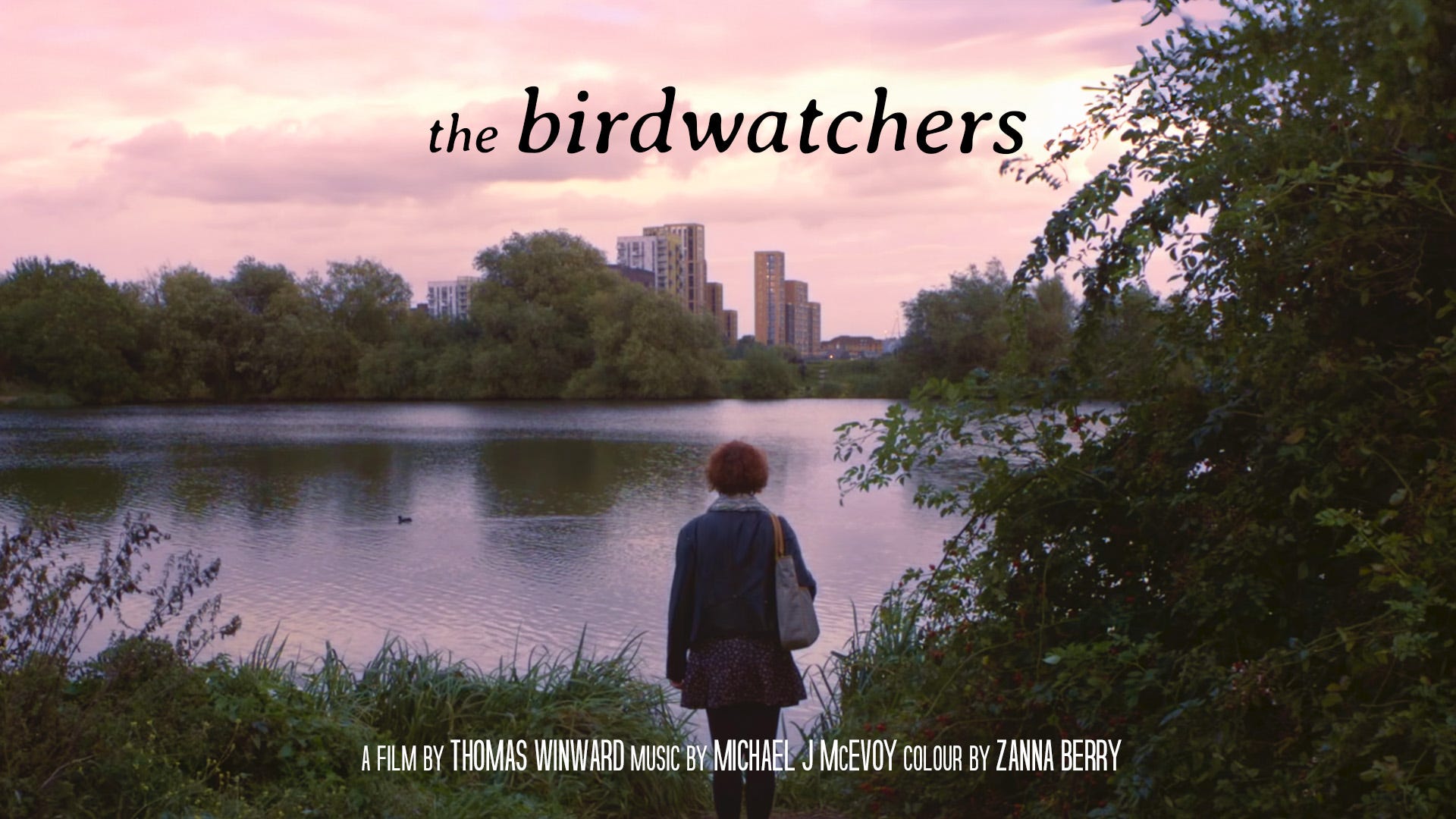
Thanks for reading. If you are in London on 28th September, my short film The Birdwatchers will be screened at the Odeon on Tottenham Court Road as part of an environmental showcase.
I’ll be there and doing a Q&A, so do come and ask me difficult questions and watch me squirm. Tickets are available here.
The very same film has also been nominated for Best Documentary at Greenwich Film Festival, which is screening as part of the Mind showcase at Greenwich Picturehouse on September 19th. Sadly I can’t make it but do check it out if you are in the area - it’s in the company of some fabulous films.
Finally, there will be no Urban Nature Diary next week. I am travelling and intend to do little more than hike, look at birds, and read. Normal service will resume after that.
As ever, I am grateful for the time you have spent reading my work.
3 years ago I deleted and disconnected fromall social media. This year I discovered Substack. I now spend hours scrolling on Substack.
This is what I am passionate about! I don’t have a smartphone but I do have an iPad. I will hold off on getting one for as long as possible. The way that social media sucks you into the online world, is deeply concerning. Certainly we need to have support groups for phone addictions, like AA.